
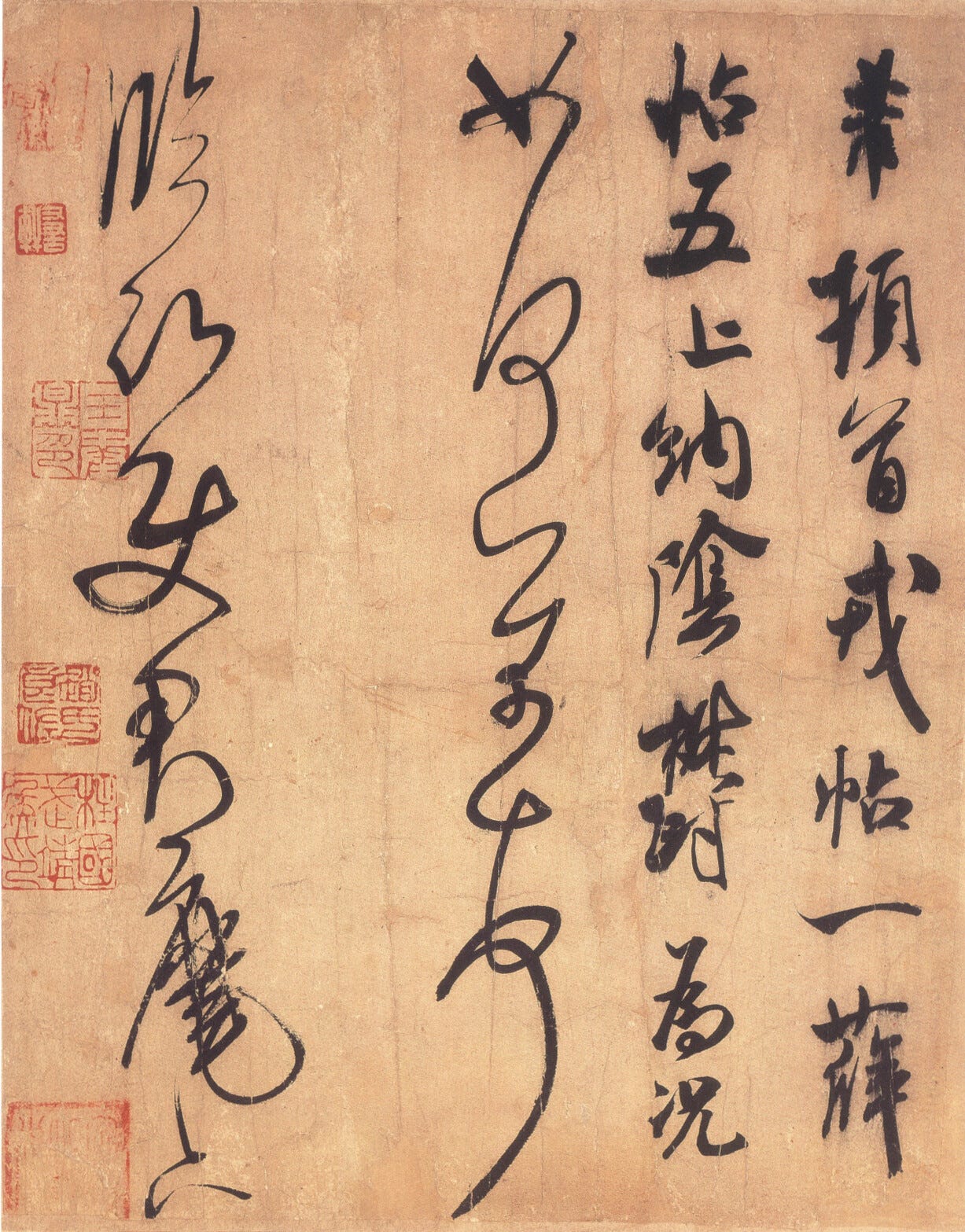
This post started as an attempt to figure out the similarities between writing software and writing poetry, but I quickly realised that would make for too long and complex a piece. Instead, I decided to focus here on one dimension of that original post: the way logic and argument works in poetry — one of poetry’s qualities which I think makes it, strangely, a distant cousin of software engineering. This post analyses one poem in particular to understand its argumentative structure, and show how argument contributes to the feelings evoked by the poem.
People who know me as a software engineer are often surprised when I tell them I write poetry in my spare time (sometimes the surprise goes the other way, too). I think this is because, on the face of it, software and poetry seem as if they couldn’t be more different: whilst poetry seems to have something to do with, amongst other things, expressing one’s emotions and ambiguity and beauty, software engineering seems to be something cool, logical and dispassionate.1
However, I think that the two disciplines have more in common than they might seem to at first glance. In this post I want to sketch out how logic or argument works in poetry, which is one of the qualities I think a well-made poem shares with a well-crafted piece of software.2
Argument
The Merriam-Webster online dictionary gives the following definition of argument:
a coherent series of reasons, statements, or facts intended to support or establish a point of view3
An argument must be coherent, involve the chaining together in series of a set of statements, or facts, and its end goal is to establish a point of view. I think this describes quite well one of the main goals of poetry: to effectively communicate the poet’s worldview.4
Take this short piece by Li Qingzhao, a well-known Song dynasty poet:5
Last night, the rain was sparse,
the wind sudden.

Sleep did not dissolve
the last of the wine.

When asked, the girl
rolling up my curtains
says the flowering crab apples
are still 'the same.'

But don't you know? Don't you know?
The green will thicken and the red thin.
The first two stanzas present the poem’s opening facts. We are told that the speaker was either watching harsh weather or outside in it. We know that she was drunk, or had at least been drinking, and slept badly as a result. We know that she is reminiscing (“Last night”), which establishes an almost elegiac framing for the piece. The subtext of these facts is that the expected effects of sleep — to wipe one day away in favour of the next — has been disturbed; the speaker is still affected by the events of the previous night, whatever they were.6
The content of the first stanza seems significant to me: the world described therein is not a friendly one — the wind is ‘sudden’; the rain, although definitely present, is ‘sparse’. What we are being told, I think, is that this is a cold and unpredictable world where even something unwanted (the rain) cannot be reliably found. This contrasts with the mood of the second couplet, which seems to imply companionship (a drinking companion?). The poem is making subtle opening moves to juxtapose the human and the natural orders.
But it’s the third and fourth stanzas where the poem’s argument is really revealed. In the third, the speaker asks a servant about the state of some crab apple blossoms outside her window: she wants to know if the scene has changed; perhaps if the flowers are gone, blown away by the previous night’s harsh wind. The servant’s response — that they are ‘the same’ — seems to distress her. The implication here is thus that the speaker had expected the scene to have changed; that she knows that time has moved on, and she expects that to be reflected in the natural order of things. Her distress arises from the conflict between this expectation and its (reported) reality; that nothing has changed.7
The fourth and final stanza synthesises the poem’s argument and takes the whole thing in a new direction: looking forward, to future time that will pass fleetingly:
The green will thicken and the red thin.
Such is the movement of time, it’s almost as if the future is over before it has arrived. Indeed, in the mind of the speaker, it already has arrived. Her appeal seems to leap right off the page, directed towards the reader rather than the servant, lending these lines emotional force.8 The closing stanza almost operates as a kind of inversion: it’s not the natural order that advances time, but rather human expectation.
In my view, this is the central argument of the poem: the passing of time is inescapable (it is part of the natural order), yet it is also our human fear of its passing which grants it its power over us; its capacity to arouse emotion. In preempting or anticipating the passing of time, we almost seem to bring it about.9
Conclusion
It’s not often that I’ve heard poems discussed in terms of their logic or argument, and it might strike some as a strange thing to do, but I think it’s the argument of a poem — and how well-built that argument is — which gives a poem its sense of ‘journey’. Although they may be non-linear, and rely heavily on imagery, poems are definitely ‘a coherent series of reasons, statements, or facts’. We know when we’ve gotten to the end of the argument because we can feel it in our bodies: a moment of understanding why we’ve been engaging with the thing we’re engaged with. And it’s when that argument has been fully played out that we see the poet’s ‘point of view’. A well-argued poem makes us look again at the world and reveals something new to us.
I think the fact that software is (or at least, has been) a financially well-rewarded career choice and poetry distinctly not, reinforces this mentality.
In a future post, I may well write about the counterpart to this: on argument in software engineering.
https://www.merriam-webster.com/dictionary/argument. Accessed on 2026-09-10.
Another term I hear quite frequently in discussions of poetry is stakes, as in “what is at stake in this poem?”. I think this is close to what I mean by argument here.
Li Qingzhao, “As in a dream (Late spring)”, trans. Wendy Chen. From Chen’s wonderful collected translations of Li’s work, The Magpie at Night.
We might wonder, in passing, why the speaker hopes for such a soothing or soma-like quality from her sleep.
As an aside, I think that the introduction of ‘the girl’ further heightens this juxtaposition: the speaker of the poem is almost dispossessed of her world; she doesn’t even open her own curtains. It’s as if she’s totally cut off from the world.
I think of this effect similarly to an actor breaking the fourth wall and staring directly into the camera.
It is interesting that this final image of time’s passing is projected into the natural world: the fear is a human one (time passing, death), given image in nature. It is almost as if Li is saying that we are only able to represent our fears sufficiently by delegating them to an object of a different, non-human order — in fact, the very order we are supposedly terrified of.